Hippo Leasing Recommends Top Commercial Vehicles for Daily Business Use
This article was produced by Hippo Leasing, the UK's trusted small business leasing experts, helping companies of every size get behind the wheel of the right commercial vehicle at a manageable monthly cost.
Picking the right commercial vehicle is one of the most practical decisions a business owner will make. The wrong choice can mean cramped load space, unnecessary running costs, or a vehicle that simply does not suit the demands of the working day. The right choice, on the other hand, can make operations smoother, present a more professional image to clients, and keep costs predictable month after month.
In this guide, Hippo Leasing walks you through seven of the most capable and well-regarded commercial vehicles available to lease in the UK today. Whether you run a sole trader operation or manage a small fleet, there is something in this list for you. Each vehicle has been chosen for its reliability, practicality, and suitability for daily business use, and we have matched each one to the type of business that will get the most from it.
The Citroën Berlingo: Small Van, Big Personality
Why the Berlingo Works Hard in Tight Spaces
The Citroën Berlingo has earned a loyal following among small business owners, and it is not difficult to see why. It sits in the compact van segment but punches well above its weight in terms of load volume, offering up to 4.4 cubic metres of cargo space depending on the variant chosen. That is a genuinely useful figure for a van that is easy to manoeuvre through urban streets and fits into a standard car parking space without drama.
Inside the cab, the Berlingo feels modern and thoughtfully laid out. The dashboard is clean, storage is generous, and the seating position is comfortable enough for drivers spending the better part of a working day behind the wheel. Citroën has done a good job of making this a van that is pleasant to drive rather than merely functional, which matters when the working day is long.
Running costs are another area where the Berlingo performs well. Its diesel engines return strong fuel economy figures, and the overall cost of ownership tends to be modest. Parts are widely available, and servicing intervals are reasonable, which keeps the total monthly outlay predictable, a quality that any small business will appreciate.
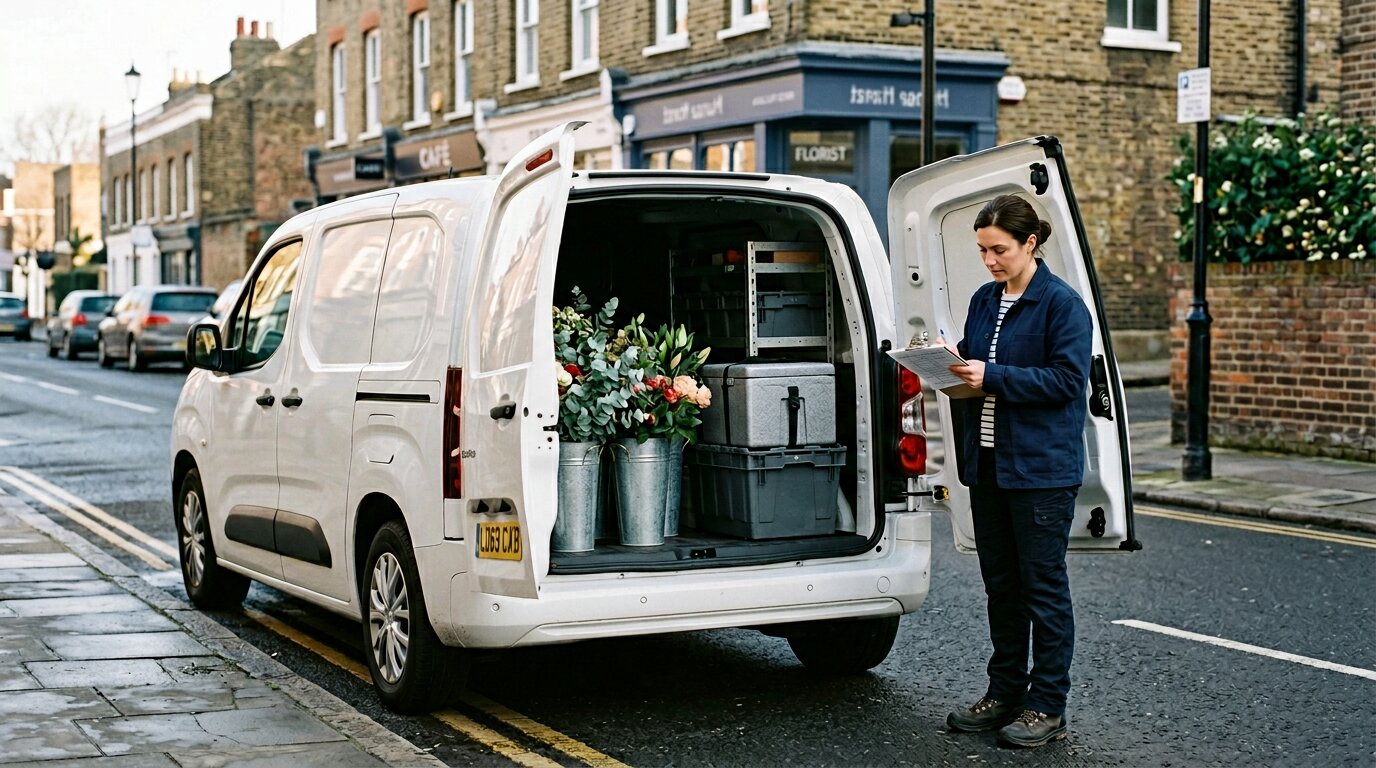
The Citroën Berlingo is an ideal match for independent florists, small catering suppliers, and courier operators working within city boundaries. If your business involves frequent urban deliveries to homes or businesses, the Berlingo's compact footprint and efficient engines make it a natural first choice.
The Mercedes-Benz Sprinter: The Professional's Workhorse
A Premium Van That Means Business
Few vans carry the same professional weight as the Mercedes-Benz Sprinter. It has been a benchmark in the large van segment for decades, and each iteration has refined what was already a strong formula. Available in multiple roof heights, body lengths, and payload configurations, the Sprinter can be specified to match almost any commercial requirement, from mobile workshops to refrigerated delivery.
The driving experience is notably polished for a vehicle in this category. The cab is well constructed, road noise is well managed, and the driving position suits a range of body types comfortably. Long-distance motorway runs feel far less fatiguing in a Sprinter than in many of its rivals, which is a significant advantage for businesses whose work takes drivers across the country rather than just the local area.
On the technical side, the Sprinter's range of diesel engines strikes a sensible balance between power and economy. The nine-speed automatic gearbox, available on higher-specification models, is a genuine comfort improvement for drivers navigating mixed urban and motorway routes. Connectivity features, including Mercedes' own van management software, give fleet managers useful oversight of vehicle performance and location.
The Mercedes-Benz Sprinter is the vehicle of choice for specialist trade businesses, medical equipment suppliers, and high-end event logistics companies. If your brand image matters as much as your payload capacity, arriving in a Sprinter sends exactly the right message to clients.
The Vauxhall Combo Cargo: Efficiency Meets Everyday Practicality
A Compact Van Designed for the Long Haul
The Vauxhall Combo Cargo may not be the flashiest name in the van world, but it is a quietly impressive piece of kit that delivers genuine value for everyday business use. Based on the same underpinnings as the Citroën Berlingo and Peugeot Partner, the Combo Cargo benefits from well-developed platform engineering that has been refined over several generations. The result is a van that is dependable, easy to live with, and notably cost-effective to run.
Load practicality is a key selling point. The Combo Cargo offers a flat load floor, wide-opening rear doors, and an optional fold-flat front passenger seat that allows long items to be loaded through the cab, a detail that sounds minor but proves genuinely useful when transporting pipes, ladders, or framing materials on a regular basis. The cargo area is sensibly shaped, which means less wasted space and more efficient packing.
Driver comfort has improved considerably in recent iterations. The touchscreen infotainment system is responsive, the seating is supportive, and visibility from the cab is good, particularly during reversing manoeuvres. Vauxhall has also made strides in passive safety, and the Combo Cargo performs well in this regard for a vehicle of its size and price point.
For electricians, plumbers, and small-scale tradespeople making multiple daily site visits, the Vauxhall Combo Cargo strikes a highly effective balance between carrying capacity and fuel economy. It is a practical, no-nonsense companion for those who need their van to simply get the job done, day after day.
The Ford Transit (Medium Roof): The Nation's Favourite for Good Reason
Decades of Trust Built on Real-World Performance
The Ford Transit needs very little introduction. It is the UK's best-selling van and has held that position with considerable consistency, not through marketing alone but because it genuinely delivers on its promises. The medium roof variant in particular represents the sweet spot of the Transit range, offering substantial load volume without the ungainly height of a high roof model, making it practical for multi-storey car parks and loading bays with height restrictions.
Ford's engineering team has continued to invest in the Transit's powertrain and chassis over the years, and the current generation reflects that effort. The EcoBlue diesel engines are notably refined and return strong fuel economy across varied driving profiles. The ride quality is well judged for a panel van, firm enough to handle a loaded cargo bay without becoming unsettled, and compliant enough to keep the driver comfortable on a long day.
The Transit's interior layout is also a genuine strength. There is a wide choice of storage solutions throughout the cab, the dashboard ergonomics are logical, and the optional SYNC infotainment system integrates well with smartphones. Ford has also made advances in driver assistance technology, with available features including lane-keeping assist and a rear-view camera, both of which add a useful layer of safety for professional drivers.
The Ford Transit in medium roof configuration is particularly well suited to building merchants, HVAC contractors, and regional parcel delivery businesses. Its combination of a well-established dealer network, strong parts availability, and dependable day-to-day performance makes it an especially risk-free choice when leasing your first commercial vehicle.
The Renault Master (Luton): Maximum Capacity, Maximum Versatility
When You Need a Van That Carries Everything
The Renault Master in Luton body configuration is a different proposition from the panel vans in this list. A Luton van features an enclosed box body that extends over the cab, providing a significantly larger load area than a standard panel van of equivalent length. This makes it an outstanding choice for any business that regularly moves bulky, lightweight cargo where volume, rather than weight, is the limiting factor.
The Master's cab area is well appointed and practical, with enough storage to keep a working driver organised throughout the day. Visibility is reasonably good given the vehicle's overall size, and the diesel engines perform adequately on both urban and motorway runs, though the Luton body does introduce a degree of wind resistance that affects fuel economy at higher speeds. It is worth factoring this into route planning and cost projections.
Luton vans also frequently come equipped with a taillift, and the Master is no exception when specified accordingly. A taillift dramatically reduces the physical effort involved in loading and unloading, which is a meaningful benefit for drivers working without a full team. It also reduces the risk of injury during repeated heavy handling, something that any responsible business owner will take seriously.
The Renault Master Luton is the natural choice for furniture removal companies, theatrical and events hire businesses, and garden furniture or outdoor living retailers. If your working week involves loading sofas, display stands, or large retail fixtures, this vehicle's generous box volume will earn its keep very quickly.
The Volkswagen Transporter T6.1: Where Refinement Meets Reputation
A Premium Light Commercial Vehicle with a Devoted Following
The Volkswagen Transporter T6.1 occupies an interesting and rather enviable position in the commercial vehicle market. It is broadly a medium-sized panel van, comparable in purpose to several others in this list, but it brings with it a level of refinement, solidity, and perceived quality that its competitors rarely match. The build quality is immediately apparent from the moment you open the door, and the driving experience is markedly more car-like than most vans of this size.
Specification levels on the T6.1 are generous even in standard trim. The infotainment system is intuitive, the driver assistance package is comprehensive, and the overall cab environment is thoughtfully designed. Volkswagen clearly understands that a driver spending eight to ten hours a day in a van is not going to tolerate a poorly considered workspace, and the Transporter reflects that understanding at every level.
From a payload and load space perspective, the Transporter is competitive rather than class-leading. The cargo area is well proportioned and accessible, and the vehicle handles confidently when loaded. Where the T6.1 truly distinguishes itself is in durability and long-term reliability, both of which are above average for the segment, making it a sensible choice for businesses that plan to cover high annual mileage.
The Volkswagen Transporter T6.1 is a particularly strong match for luxury home service businesses, mobile beauticians, wedding florists, and premium artisan food suppliers. If your clients expect a certain standard of presentation from the moment you arrive, the Transporter projects exactly the right level of professionalism and care.
The Isuzu D-Max Diesel: The Pickup That Powers Through
Tough Enough for the Jobs That Vans Cannot Handle
The Isuzu D-Max is not a van at all, but it earns its place in this list by serving a category of business that conventional panel vans simply cannot address. As a one-tonne pickup truck, the D-Max combines a useful enclosed cab with an open load bed that can carry plant, equipment, and materials that would never fit, or would be too heavy, for a traditional van. The diesel powertrain is robust and well suited to both on-road driving and the kind of light off-road work that trade businesses regularly encounter.
The D-Max's towing capacity is one of its headline strengths, with figures that comfortably accommodate a loaded plant trailer or a substantial horse box. This makes it a genuinely multifunctional business vehicle for operators whose working day might involve towing as frequently as it does carrying. The four-wheel drive system, available across the range, provides additional capability on muddy construction sites or rural tracks.
Inside, the D-Max has grown more refined with each generation, and the current model offers a cabin that feels noticeably more polished than older pickup trucks tended to. Connectivity features are current, the seating is comfortable, and the overall durability of materials reflects a vehicle designed to absorb the rough-and-tumble of a working life without complaint.
Landscaping companies, agricultural contractors, and construction subcontractors will find the Isuzu D-Max a highly capable daily companion. If your business requires a vehicle that can cross a field, tow a trailer, and still park at the merchant's yard without incident, the D-Max belongs firmly on your shortlist.
Finding the Right Commercial Vehicle Is the First Step Forward
Each of the seven vehicles featured in this guide brings something distinct to the table, and the best choice will always come down to the specific demands of your business. A city-based florist and a rural landscape contractor have very different needs, and the commercial vehicle market has evolved precisely to address that range. What all seven vehicles share is a proven track record of daily business use and availability through a straightforward monthly lease arrangement that keeps costs predictable and capital free for everything else your business needs.
Frequently Asked Questions About Commercial Vehicle Leasing
What exactly is van leasing, and how does it work?
Van leasing, commonly referred to as contract hire, involves making a fixed monthly payment in exchange for use of a vehicle over an agreed period, typically between two and five years. At the end of the contract, the vehicle is returned to the leasing company. You never own the vehicle, but you also carry no depreciation risk, and you will always be driving a relatively recent, well-maintained commercial vehicle. Hippo Leasing arranges contract hire agreements for UK businesses of all sizes.
What should a standard business van lease include?
A typical contract hire agreement covers the vehicle itself, road tax for the full duration of the lease, and roadside breakdown cover. Businesses can also opt for a fully maintained package, which adds scheduled servicing, tyre replacement, and MOTs to the monthly cost. GAP insurance and relief vehicle cover are further options worth discussing. Hippo Leasing will structure a package around your specific operational needs and budget.
Is van leasing a realistic option for a new business?
In many cases, yes. A newer business may be asked to supply additional financial documentation or provide a personal guarantee, but leasing can actually be more accessible than securing a traditional business loan for a vehicle purchase. Hippo Leasing supports businesses at various stages of development and will advise on the most suitable route based on your trading history and credit circumstances.
What are the main financial benefits of leasing rather than buying?
The two biggest advantages are cash flow management and cost predictability. Leasing removes the need for a large upfront capital payment, leaving working capital available for the business. Monthly costs are fixed and easy to budget for. Road tax is typically bundled in, and a maintained lease eliminates the surprise of an unexpected service bill. You also avoid the risk of being left with a depreciating asset when the time comes to upgrade.
How should I decide on the right mileage for my lease agreement?
Base your estimate on your realistic annual driving patterns and, if in doubt, round upward. Excess mileage charges at the end of a contract are among the most frequent unexpected costs for lessees. Take stock of your current routes, account for any anticipated business growth, and go through the figures carefully with your leasing consultant. Hippo Leasing advisers will work through the numbers with you before any agreement is signed.
Can a leased van be put through the business for tax purposes?
Yes, in most cases. Where a vehicle is leased in the business name and used wholly or primarily for business purposes, lease payments can typically be offset against taxable profits. VAT-registered businesses can usually reclaim 50% of the VAT on lease payments, rising to 100% where the vehicle is used exclusively for business. Tax treatment does vary by circumstance, so it is always worth confirming your specific position with a qualified accountant.
Hippo Leasing is a UK-based commercial vehicle leasing specialist, partnering with small and medium-sized businesses to match them with the right vehicles at competitive monthly rates. To receive a no-obligation quote on any of the models covered in this article, visit hippoleasing.co.uk or speak directly with a member of our team by phone.